2026 Top Anal Plug Types What Should Global Buyers Choose?

The 2026 Anal Plug market is becoming more varied, but greater choice can create greater confusion. Global buyers now compare silicone, glass, stainless steel, vibrating, inflatable, and beginner-friendly designs. Each type offers different benefits, limitations, and purchasing considerations.

Dr. Jill McDevitt, a sexologist and sexual wellness educator, offers a useful principle: “Personal comfort and informed consent should guide every choice.” That idea should remain central when evaluating an Anal Plug. Buyers should examine material quality, surface smoothness, flared-base security, size progression, cleaning requirements, and packaging information. A polished medical-grade silicone plug may suit a cautious beginner, while a rigid stainless-steel design may appeal to experienced users seeking weight and temperature contrast. Preferences differ.

Safety comes before novelty.

Reliable manufacturers should provide clear material descriptions, care instructions, batch information, and responsive customer support. Buyers should also check local product rules, import requirements, age restrictions, and marketplace policies before ordering internationally. These details can affect availability and compliance.

Some marketing claims remain vague. “Premium” does not always mean safer. “Body-safe” should be supported by specific material information. Buyers may need to contact suppliers directly, which is inconvenient but worthwhile.

This guide compares the leading Anal Plug types for 2026. It focuses on practical selection rather than exaggerated promises. Comfort, control, hygiene, and trustworthy documentation will matter more than flashy features. A perfect universal choice does not exist, and that limitation deserves honest attention.
2026 Top Anal Plug Types What Should Global Buyers Choose?

What Are the Main Types of Anal Plugs in 2026?

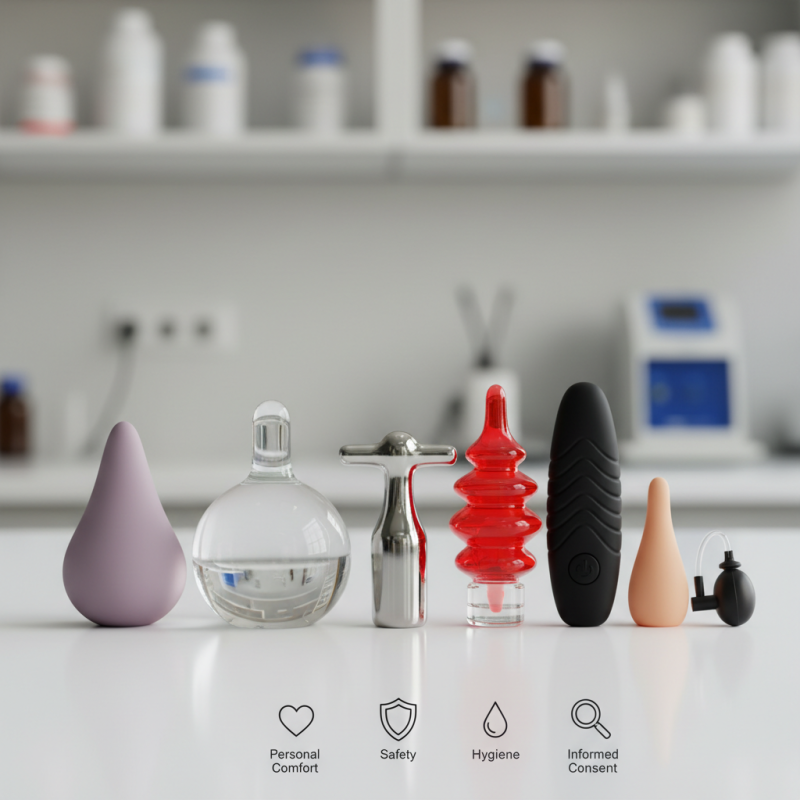
In 2026, anal plugs mainly fall into five practical types: beginner, classic, vibrating, inflatable, and decorative. Beginner plugs have slimmer shafts and tapered tips, helping new users control insertion gradually. Classic plugs offer balanced proportions for routine use. Vibrating models add external stimulation, but buyers should check waterproof ratings and battery access. Inflatable designs change size after insertion, requiring careful pressure control and clear instructions. Decorative styles may use metal accents, crystals, or sculpted shapes, yet appearance should never replace safety.

Material separates reliable products from questionable ones. Medical-grade silicone, stainless steel, and borosilicate glass are non-porous and easier to clean. TPE and PVC can feel softer, but their porous surfaces may retain residue. Every plug should include a wide flared base or a secure retrieval handle. This is not optional. ISO 3533:2021 provides relevant design and safety guidance for sex toys, although it does not certify every product globally.

Grand View Research valued the global sexual wellness market at about US$35.3 billion in 2023 and projected an 8.6% CAGR from 2024 to 2030. Statista Market Insights also reports sustained growth in intimate wellness spending, supporting wider product diversification. These reports rarely isolate anal plugs, so exact category figures remain imperfect. Global buyers should compare material disclosures, dimensions, cleaning instructions, and independent quality testing. Packaging claims can be vague. A smaller, transparent product may be a better choice than a larger one with missing specifications.

How Do Anal Plug Materials, Shapes, and Sizes Differ?

Anal plug materials, shapes, and sizes influence comfort, hygiene, and buyer confidence. For global purchasing, these details matter more than attractive packaging. Medical-grade silicone feels soft, remains flexible, and is nonporous when properly manufactured. It is usually easier to clean than porous materials. Stainless steel and borosilicate glass offer firm control and smooth surfaces. However, they feel colder and require careful handling.

Shape changes pressure distribution. A tapered tip can support gradual insertion, while a wider middle section may provide more noticeable stimulation. A secure flared base is essential because it helps prevent the product from moving fully inside the body. Some designs include a loop or handle, which can improve removal. Avoid sharp edges, weak seams, and unclear material descriptions. “Body-safe” alone is not enough.

Size labels are not standardized across suppliers. Buyers should compare total length, insertable length, and maximum diameter in millimeters. Smaller sizes may suit beginners, but comfort depends on anatomy and relaxation. Larger dimensions are not automatically better. Start conservatively.

That part is often overlooked.

Water-based lubricant generally works well with silicone, while oil-based products can weaken some materials. Compatibility should be confirmed through technical documentation. Buyers should also request cleaning guidance, batch information, and independent safety testing where available. A neat specification chart cannot predict personal comfort. Even experienced buyers can misread diameter, so clear measurements and honest warnings remain important.

Which Anal Plug Features Matter for Comfort and Safety?

For global buyers, comfort and safety begin with the plug’s shape, not its decoration. A wide, stable flared base helps prevent complete insertion and supports controlled removal. The body should have rounded edges, smooth seams, and a gradual taper. Hard ridges can look attractive, but they may create pressure points during movement. ISO 3533:2021 recommends attention to material safety, surface finish, and product design for intimate products.

Material choice matters. Non-porous silicone, stainless steel, and borosilicate glass are easier to clean than porous materials. However, “body-safe” should not be accepted without documentation. Buyers should request material specifications, cleaning instructions, and chemical compliance records. A 2024 Grand View Research analysis estimated the global sexual wellness market at more than 35 billion U.S. dollars in 2023. That scale increases the need for consistent testing, not just attractive packaging.

Size should be introduced gradually. A smaller plug is not always safer if its base feels unstable or its taper is abrupt. Compatibility with water-based lubricant should be clearly stated, while oil-based products may damage some elastomers. The U.S. Consumer Product Safety Commission reported over 30,000 emergency-department injuries linked to adult sexual products between 2012 and 2021, although the data covers a broad product category. The number is imperfect, but it still supports careful sizing, slow use, and stopping when discomfort appears. Safety should feel practical. Not merely promised.

How Should Global Buyers Compare Quality, Compliance, and Suppliers?

Global buyers should compare anal plug types through documented quality, compliance, and supplier controls, not photographs alone. Grand View Research estimated the global sexual wellness market at USD 29.32 billion in 2023, with continued growth through 2030. That expansion increases supplier choice, but also increases quality variation. A stable plug should use body-safe, clearly identified materials, a secure flared base, smooth finishing, and consistent dimensions. Ask for material declarations, migration testing, tensile testing, and odor-control records. Reports should come from laboratories accredited to ISO/IEC 17025.

Compliance differs by destination. The European Union’s General Product Safety Regulation has applied since December 2024, while REACH may affect chemical substances and restricted materials. RoHS relevance depends on electrical components, such as motors or charging parts. Do not accept a generic “CE certified” statement without a product-specific Declaration of Conformity and supporting test evidence. Packaging should show material information, warnings, importer details, and traceable batch numbers.

Supplier evaluation needs physical evidence. Request three samples from separate production batches. Check surface seams, base strength, charging-port seals, and dimensional consistency under bright inspection light. Review the factory’s corrective-action history, not only its audit score. A spreadsheet cannot reveal every flaw. Some buyers overvalue low unit cost and underestimate recalls, rework, or customs delays. That judgment deserves reconsideration. Suppliers should also disclose subcontracting, inspection frequency, complaint rates, and retention periods for test records. Industry estimates vary, so buyers should verify every figure and certificate against the exact model.

2026 Top Anal Plug Types: What Should Global Buyers Choose? — How Should Global Buyers Compare Quality, Compliance, and Suppliers?

Anal Plug Type Typical Material Typical Size Range Main Buyer Advantage Key Quality Requirements Compliance and Test Evidence to Request Supplier Evaluation Priority Best-Fit Global Buyer
Small Beginner Plug Body-safe, non-porous silicone; stainless-steel core may be used Approximately 20–30 mm maximum diameter; 70–100 mm insertable length Lower entry barrier and easier size selection for first-time users Smooth rounded tip, gradual taper, stable flared base, no exposed seams or sharp edges Material specification, restricted-substance test report, migration or extractables information where applicable, production inspection records Dimensional consistency, odor control, surface finish, base stability, packaging accuracy Mass-market retailers, introductory product ranges, and private-label buyers
Classic Tapered Plug Platinum-cured silicone, glass, stainless steel, or aluminum with a suitable finish Approximately 25–45 mm maximum diameter; 80–130 mm insertable length Simple construction, broad consumer appeal, and relatively efficient production Even taper, rounded tip, secure base, consistent wall thickness, polished or non-porous surface Material declaration, batch traceability, chemical compliance documentation, and finished-product inspection report Process control, color consistency, dimensional tolerance, defect rate, and documented corrective actions General-purpose international catalogs and buyers seeking a balanced price-to-quality product
Wide-Flared-Base Plug Non-porous silicone, stainless steel, or glass Approximately 25–50 mm maximum diameter; base width commonly 45–75 mm Improved retention and a clearly defined external stop Base must remain stable, edges must be rounded, and the body-to-base transition must be free from stress cracks Mechanical stability assessment, dimensional drawings, material documentation, surface-finish inspection, and packaging warnings Base strength, tipping resistance, bond or molding integrity, and accuracy of safety instructions Safety-focused retailers and buyers prioritizing retention design and clear consumer instructions
Vibrating Plug Silicone exterior with sealed electronic components; rechargeable or replaceable-battery formats Approximately 25–45 mm maximum diameter; 80–125 mm insertable length Adds adjustable vibration and can support multiple price tiers Fully sealed body, protected charging interface, controlled heat rise, secure battery compartment, intuitive controls Electrical safety and EMC test reports, battery transport documentation, ingress or water-resistance test evidence for stated claims, restricted-substance documentation Battery quality, charging-cycle performance, waterproofing validation, EMC consistency, firmware or control reliability Technology-oriented buyers, premium channels, and markets accepting higher after-sales requirements
Inflatable or Adjustable-Size Plug Medical-grade or equivalent flexible elastomer with an internal air system Adjustable diameter; the manufacturer should specify minimum and maximum dimensions Allows controlled size adjustment without changing the complete product Reliable valve, pressure retention, smooth exterior, visible damage indicators, and a secure flared base Pressure-retention testing, burst or leakage testing, material documentation, user instructions, and warning-label review Valve durability, repeated-cycle performance, leakage rate, cleaning compatibility, and traceability of critical components Specialist distributors prepared to manage technical instructions and customer support
Glass Plug Non-porous borosilicate glass or another documented suitable glass formulation Approximately 20–45 mm maximum diameter; 80–140 mm insertable length Non-porous surface, easy cleaning, and compatibility with temperature-based product positioning when instructions permit No chips, cracks, sharp transitions, or internal defects; rounded tip and secure handle or base Glass composition declaration, thermal-shock or impact testing, visual inspection criteria, dimensional drawings, and packaging drop-test evidence Defect screening, edge polishing, packaging protection, breakage rate, and lot-level inspection records Premium gift channels and buyers able to support protective packaging and careful logistics
Metal Plug Stainless steel, anodized aluminum, or another documented non-porous metal Approximately 20–50 mm maximum diameter; 80–150 mm insertable length High durability, non-porous surface, and strong premium positioning Smooth polished finish, corrosion resistance, secure base, accurate weight and dimensions, no plating flaking Alloy or grade declaration, corrosion testing, coating or plating test results if applicable, restricted-substance testing, and final inspection records Metal grade verification, polishing quality, corrosion resistance, machining tolerance, and packaging protection Premium international buyers and channels emphasizing durability and long product life
Wearable or Harness-Compatible Plug Silicone, stainless steel, or a combination of non-porous materials Approximately 25–45 mm maximum diameter; base or connector dimensions vary by system Supports hands-free use and accessory-based product ecosystems Secure connector, rounded external surfaces, load-resistant base, compatibility information, and reliable fit Mechanical pull or load testing, material documentation, accessory compatibility assessment, warning labels, and packaging instructions Connector strength, fit tolerance, repeated-use durability, material separation, and instruction clarity Accessory-focused retailers and buyers building coordinated product collections

Global Buyer Comparison Checklist

  • Request a complete material declaration and confirm that all body-contacting surfaces are non-porous, smooth, and free from unnecessary coatings.
  • Ask for batch-level quality records, dimensional tolerances, defect classifications, corrective-action procedures, and product traceability.
  • For electrical products, verify electrical safety, electromagnetic compatibility, battery documentation, charging safety, and any stated water-resistance claims.
  • For glass and metal products, request impact, thermal-shock, corrosion, polishing, and packaging-performance evidence relevant to the design.
  • Check market-specific obligations, including applicable chemical restrictions such as REACH, electrical and electronic requirements such as RoHS where applicable, product-safety rules, labeling, packaging, and importer responsibilities.
  • For European Union sales, review the applicable requirements under the General Product Safety Regulation and maintain technical documentation, risk assessment, traceability, and responsible economic-operator information.
  • Do not treat a supplier’s declaration alone as proof of compliance; verify test reports, laboratory scope, report dates, sample identity, and whether the tested product matches the production model.

Note: Dimensions and material combinations shown above are representative market ranges for product comparison, not universal specifications. Final suitability depends on the finished design, intended market, applicable laws, documented risk assessment, and independent quality verification.

Which Anal Plug Type Best Fits Different User Needs and Markets?

2026 Top Anal Plug Types: What Should Global Buyers Choose?

The best anal plug type depends on user experience, comfort goals, and market expectations. Beginners often prefer a small, tapered plug with a wide, secure base. It should feel stable without creating pressure. Experienced users may seek graduated sizes, textured surfaces, or gentle vibration. However, more features do not always mean better value.

Material quality deserves careful attention. Body-safe silicone is soft, non-porous, and easier to clean than many porous alternatives. Smooth finishes help reduce friction and support safer handling. A flared base is essential for controlled removal.

Buyers should also check waterproof claims, charging protection, packaging clarity, and supplier testing records. These details can vary between markets. They should not be assumed.

Tips: Match product size to customer confidence, not only sales trends. Offer clear measurement charts and plain safety guidance. Recommend water-based lubricant for silicone products, unless the manufacturer provides different instructions. Clean each item before and after use, then inspect it for cracks or surface changes. Avoid products without reliable material information. Some shoppers want stronger sensations, while others need discreet, quiet, and easy-to-store designs. Market research can reveal useful patterns, but it can also mislead when surveys lack real user experience. Gaps remain, and buyers should keep reviewing feedback.