The 2026 Best Wand Vibrator for Global Wholesale Buyers should be more than a popular product list. It should guide importers through practical quality, compliance, and supply decisions. A reliable Wand Vibrator needs consistent motor performance, body-safe materials, secure charging, and clear operating instructions. These details matter when buyers compare samples under real warehouse and retail conditions.
Wholesale evaluation should include noise levels, vibration settings, battery capacity, waterproof claims, packaging strength, and replacement-part availability. Ask suppliers for material declarations, testing records, factory details, and relevant market documentation. Requirements differ across countries, so buyers must verify local product, labeling, electrical, privacy, and age-related rules before ordering. Certifications should be checked, not simply printed on a brochure. That small distinction can prevent expensive delays.
Commercial performance also depends on minimum order quantities, lead times, private-label options, warranty handling, and communication speed. A supplier that answers clearly is often easier to manage after shipment. Still, no shortlist is perfect. Sample testing may reveal button stiffness, charging heat, or packaging damage that photographs hide. I would also question unusually low prices, even when the specifications appear impressive. Reliable purchasing requires evidence, repeat testing, and honest review of weaknesses. With these standards, global buyers can compare Wand Vibrator suppliers more responsibly and build a product range suited to their markets.
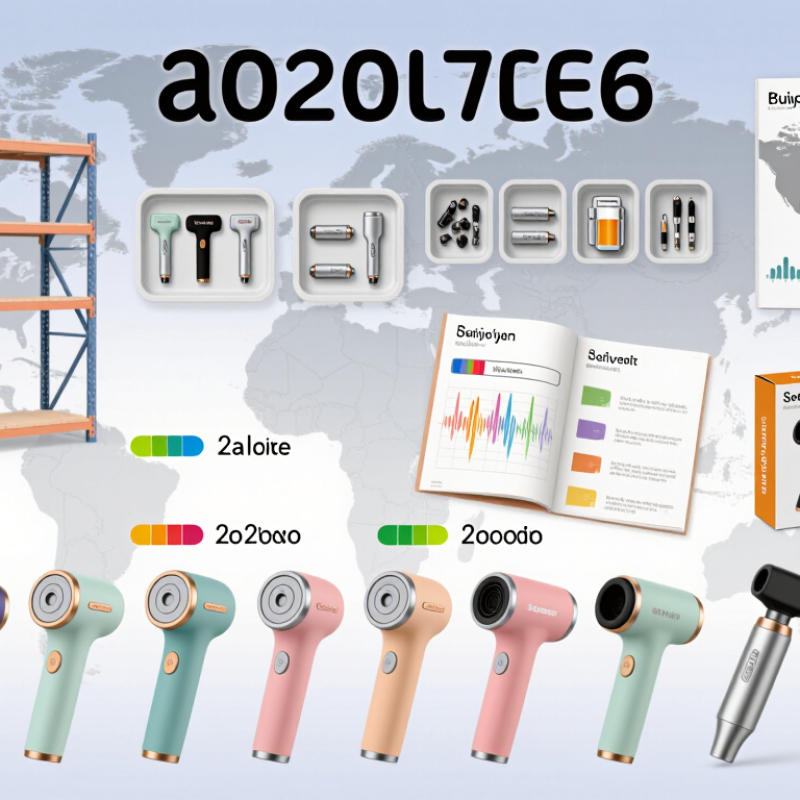
Global sex-toy revenue reached US$35.2 billion in 2023, according to Grand View Research (GVR). This figure shows strong worldwide demand, but it does not represent wand vibrators alone. Buyers should avoid treating one market number as a guaranteed sales forecast. Regional preferences, purchasing power, and local regulations can change results quickly.
For 2026 purchasing, focus on practical product evidence. A reliable wand vibrator should offer stable vibration, comfortable handling, durable materials, and consistent battery performance.
Request safety documentation for body-contact materials. Check charging tests, waterproof claims, packaging quality, and defect rates. In my experience, small details matter. A loose charging port can create costly returns.
Suppliers should also provide clear labeling and age-restricted sales guidance where required. Product compliance must be reviewed for each destination market.
Tips:
Compare samples before placing bulk orders. Ask for test reports and production photos. Review warranty terms in writing. Keep cartons compact and discreet. Do not choose only by the lowest unit price. A lower price may hide weaker motors, unclear materials, or unstable quality control. Sales data should guide inventory, but direct customer feedback often reveals what spreadsheets miss. One limitation remains: public market reports may use different definitions, so forecasts need regular review.
For global wholesale buyers, wand vibrators should be classified by motor design, not appearance alone. Brushed motors usually cost less and create stronger vibration variation. Brushless motors often run smoother, last longer, and produce less mechanical wear. Dual-motor models can deliver broader coverage, but they need tighter quality control. My own early purchasing mistake was comparing speed settings instead of vibration consistency.
Power ratings need practical interpretation. A rechargeable battery may support portability, while corded models suit frequent commercial use. Check charging time, battery cycle performance, and protection against overheating. Quiet matters. Noise should be tested in decibels at a fixed distance, not described only as “silent.” A soft bedroom setting and a professional wellness environment may require different noise targets. Marketing language can still overpromise.
Use case completes the taxonomy. Entry-level models may fit price-sensitive retail channels and simple packaging requirements. Higher-powered units suit experienced users, provided speed control remains gradual. Travel-oriented products benefit from compact bodies, secure charging ports, and durable storage cases. Inspect silicone quality, seams, controls, and cleaning instructions before approving a production run. Ask for independent safety reports, material declarations, and batch-level inspection records. Standards differ across markets, so import documentation and electrical requirements must be checked locally. Product selection is rarely perfect; one buyer may value power, while another rejects the same model for noise or weight.
Product Taxonomy: Wand Vibrators by Motor, Power, Noise, and Use Case
The chart compares representative non-brand category benchmarks for common wand vibrator motor configurations. Power is shown in watts, while noise is measured in decibels. Brushless and dual-motor designs generally support stronger performance, while brushless motors are typically selected when lower operating noise and longer service life are priorities. Actual specifications vary by construction, battery system, speed setting, and housing design.
For global wholesale buyers, IPX7 should mean more than a waterproof label. IEC 60529 defines IPX7 as immersion in one metre of water for up to 30 minutes. It does not guarantee protection against water jets or repeated deep immersion. Buyers should request laboratory reports showing test depth, duration, sample condition, and post-test function.
Test the charging system too. IEC 62133-2 covers safety requirements for rechargeable lithium cells and batteries in portable devices. UN 38.3 testing supports safer international battery transport. A practical benchmark includes charging protection, abnormal-temperature testing, and capacity retention after repeated cycles. Ask suppliers for measured results, not rounded claims. “Long battery life” proves little.
Real use is less tidy. Seals may weaken after charging, cleaning, and storage. Test it. Run several production samples through immersion, charging, and vibration checks. Record operating time at the highest setting, because low-setting figures can mislead buyers. The 2024 Global E-waste Monitor reported 62 million tonnes of electronic waste generated in 2022, with growth expected toward 2030. Replaceable components, documented battery chemistry, and responsible end-of-life guidance therefore matter. One limitation remains: IPX7 testing is usually laboratory-based, while wholesale returns reflect months of handling. Sampling should continue after shipment.
2026 Best Wand Vibrator for Global Wholesale Buyers
Wholesale compliance starts with product design, not a late-stage document folder. ISO 3533-1:2021 addresses safety for intimate products, including materials, edges, openings, temperature, and mechanical risks. It is a technical benchmark, not automatically a government approval. Buyers should request the test scope, sample identification, laboratory accreditation, and report date. Trace every batch.
CE marking applies when relevant European Union legislation covers the product. For an electronic wand vibrator, this may involve electrical safety, electromagnetic compatibility, and restricted substances. RoHS limits specific hazardous substances in electrical and electronic equipment. REACH adds duties for substances of very high concern and supply-chain communication. A “CE certificate” alone can mislead. The manufacturer’s EU Declaration of Conformity matters more.
ECHA’s 2023 enforcement project examined 2,407 products and reported 18% non-compliance with EU chemicals rules. That figure is a practical warning for global wholesalers. Ask for RoHS test results, REACH SVHC statements, technical files, risk assessments, and production-change controls. Check plastic, silicone, coatings, cables, chargers, and batteries separately. Paperwork is not safety. In my sourcing reviews, factory consistency remains the weak point. One approved sample cannot represent every shipment. Keep retention samples and conduct random inspections before distribution. Also verify local import rules, because CE, RoHS, and REACH do not replace destination-market obligations.
| Product Configuration | Body Material | Operating Modes | Speed / Intensity Control | Battery and Charging | Ingress Protection | Typical Carton Data | Suggested Wholesale MOQ | Compliance Documentation to Request |
|---|---|---|---|---|---|---|---|---|
| Wand Configuration A | Body-safe silicone contact surface; ABS internal housing | 10 vibration patterns | 5 continuous intensity levels plus pattern mode | Rechargeable lithium-ion battery; USB charging; 2–3 hour stated charge time | IPX6 claimed; verify test method and report scope | Individual retail box; master carton commonly 24 units | 100 units | EU Declaration of Conformity; EMC and electrical-safety reports; RoHS material declaration or test report; REACH SVHC statement; ISO 3533:2021 applicability assessment; user manual and labeling artwork |
| Wand Configuration B | Silicone head with ABS handle | 8 vibration patterns | 4 continuous intensity levels plus pulse mode | Rechargeable lithium-ion battery; USB-C charging; approximately 90-minute operating target | IPX5 claimed; charging port must remain closed during cleaning | Individual retail box; master carton commonly 20 units | 100 units | EU Declaration of Conformity; EMC, battery, and charger documentation; RoHS evidence; REACH SVHC declaration; risk assessment; cleaning instructions; traceability information |
| Wand Configuration C | Silicone exterior; ABS and PC internal components | 12 vibration patterns | 6 intensity levels with memory function | Rechargeable lithium-ion battery; USB-C charging; approximately 2-hour operating target | IPX7 claimed; confirm immersion duration, depth, and charging-port protection | Individual retail box; master carton commonly 16 units | 50 units | EU Declaration of Conformity; EMC and battery test reports; RoHS testing for restricted substances; REACH SVHC communication; IP test report; applicable ISO 3533:2021 assessment; packaging and recycling marks |
| Wand Configuration D | Silicone contact surface; ABS handle with stainless-steel trim | 6 vibration patterns | 3 continuous intensity levels | Rechargeable lithium-ion battery; magnetic USB charging cable; approximately 60-minute operating target | IPX4 claimed; not suitable for immersion unless separately verified | Individual retail box; master carton commonly 30 units | 200 units | EU Declaration of Conformity; EMC and charger documentation; RoHS and REACH declarations; material specification; user warnings; batch or serial-number traceability |
| Requirement | What Buyers Should Verify | Evidence Typically Requested | Wholesale Risk if Missing |
|---|---|---|---|
| ISO 3533:2021 applicability | Confirm the exact standard title, edition, scope, product-contact materials, hygiene controls, and risk assessment requirements. | Applicable-standard review, risk assessment, material specifications, cleaning instructions, and independent test documentation where required. | Incorrect standard citation, rejected customer qualification, or nonconforming product claims. |
| CE marking | Determine applicable EU legislation for the finished product, electrical system, battery, charger, EMC, and radio functions if present. | Signed EU Declaration of Conformity, technical file index, EMC/electrical-safety reports, battery documentation, and correct product labeling. | Customs delays, marketplace suspension, corrective action, or product withdrawal. |
| RoHS | Check restricted-substance controls for homogeneous materials, cables, solder, plastics, coatings, and electronic assemblies. | RoHS test report, supplier declarations, material disclosures, and controlled component list. | Potential EU market noncompliance and costly component or shipment replacement. |
| REACH | Review substances of very high concern, intentionally added chemicals, coatings, fragrances, adhesives, and packaging materials. | Current REACH SVHC declaration, chemical test results where needed, and supply-chain communication records. | Disclosure failures, customer complaints, regulatory inquiries, or restricted sales. |
| Battery and charger safety | Verify cell protection, charger compatibility, transport classification, overheating controls, and replacement-battery policy. | Battery test summary, charger report, UN 38.3 transport test summary, SDS where applicable, and shipping marks. | Air-freight rejection, fire risk, shipment seizure, or warranty escalation. |
| Labeling and traceability | Check importer information, model identifier, warnings, charging instructions, disposal marks, batch code, and destination-language requirements. | Final artwork approval, label photographs, user manual, batch-control procedure, and packaging specification. | Retail delisting, recall difficulty, customer returns, or inability to identify affected batches. |
A wholesale scorecard should measure more than factory price. Grand View Research valued the global sex toys market at about USD 35.2 billion in 2023. It also forecasts an 8.6% annual growth rate through 2030. This growth attracts new suppliers, but inconsistent quality remains a practical risk. Compare MOQ, landed cost, warranty, testing, and supplier ROI together. A low MOQ is not automatically a win. A 500-unit order can become expensive after freight, duties, inspections, packaging, and payment fees. Request a landed-cost worksheet with every charge shown separately.
Testing should cover battery safety, charging performance, material documentation, and moisture resistance. Ask for recent inspection records, not only generic certificates. IEC 62133-2 supports rechargeable battery safety evaluation, while ISO 2859-1 provides a recognized sampling framework for production inspections. Regional chemical requirements may also differ, so verify current market rules before shipment. A clear 12-month warranty helps, but define repair, replacement, return freight, and response times. Vague warranty language creates avoidable disputes.
Tips:
Score each supplier from one to five. Give testing and defect history greater weight than price. Calculate ROI using expected sell-through, warranty claims, and repeat-order potential. Keep a small pilot order first. It may feel slower. That caution is often cheaper than a container-wide mistake. Industry reports provide useful direction, but your own defect data should eventually control purchasing decisions.