7 Butt Plug Buying Tips for Safe Global Sourcing?
Global sourcing of a Butt Plug requires more than comparing prices or browsing attractive product photos. Buyers must examine materials, manufacturing controls, testing records, packaging, and supplier communication. A low quote can hide weak quality systems, unclear ownership, or inconsistent production batches. Those risks become visible when samples arrive with sharp seams, strong chemical odors, or loose components.
Alicia Sinclair, a sexual wellness educator and founder of b-Vibe, offers a useful principle: “Safety and pleasure should never be treated as opposites.” Her perspective supports a careful sourcing process. A responsible buyer should request material specifications, independent test reports, factory audit information, and batch traceability. Medical-grade silicone claims also need verification. Marketing language is not evidence.
The following seven Butt Plug buying tips focus on practical decisions for safer international procurement. They cover supplier screening, body-safe material checks, design inspection, packaging details, quality-control agreements, shipping documentation, and after-sales accountability. These areas help buyers reduce avoidable risks while respecting applicable product, consumer-safety, labeling, and import requirements in each destination market.
Details matter.
For example, inspect the base, finish, flexibility, and cleaning instructions under bright light. Ask who performed the tests, when they were completed, and whether the report matches the exact model. I have seen sourcing advice treat compliance as a final checkbox. That is a mistake worth correcting. Compliance should influence the supplier shortlist from the beginning. Still, no checklist guarantees perfection. Independent review, physical sampling, and honest supplier conversations remain essential.
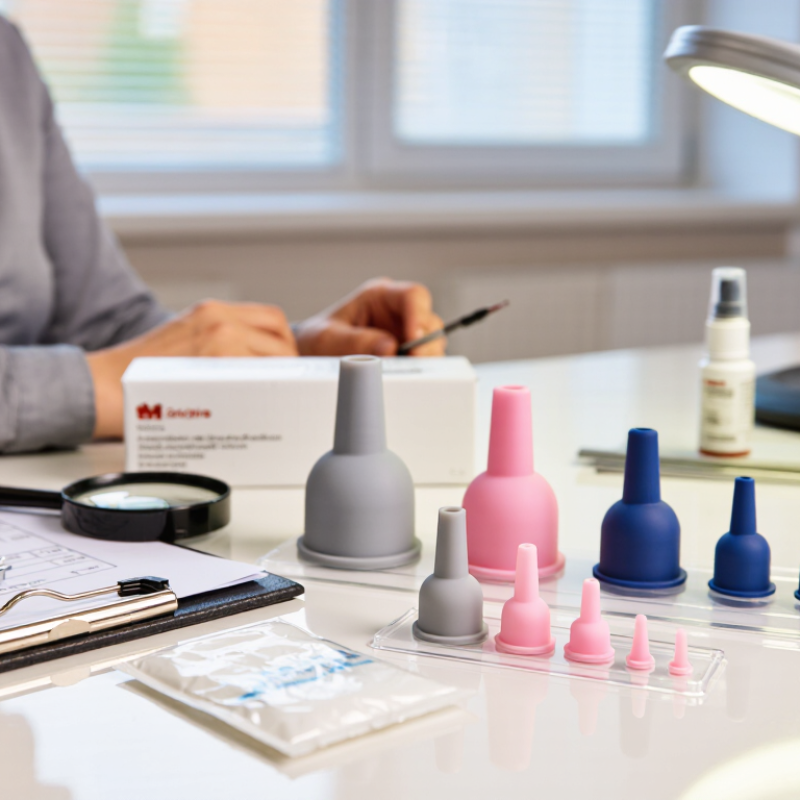
Define Safe Materials Using ISO 3533:2021 and REACH’s 0.1% Limits
Global sourcing of butt plugs should begin with a material dossier, not a glossy product photo. ISO 3533:2021 sets safety requirements for sex toys, including material suitability, design, instructions, and foreseeable use. It does not act as a universal safety certificate. Ask suppliers for the exact material grade, formulation statement, batch traceability, and independent laboratory reports.
REACH requires communication when a Candidate List substance exceeds 0.1% weight by weight in an article. This threshold is not permission to add harmful chemicals. Request SVHC screening, restricted-substance testing, and a signed declaration for every component, including coatings, adhesives, charging parts, and packaging that touches the product. ECHA’s 2023 enforcement reporting examined 2,407 consumer products and found 18% non-compliant, showing why paperwork alone deserves skepticism.
Check for smooth surfaces, rounded edges, secure bases, and cleaning instructions aligned with the material. Confirm tests cover phthalates, PAHs, heavy metals, and other substances relevant to the formulation. A recent report is not enough if the supplier changes resin or factory. Request a sample from the production batch, then compare its laboratory results with the approved specification. Keep purchase records and corrective-action evidence. Mistakes still happen. I would also verify whether the laboratory’s accreditation covers the selected methods, because a familiar logo cannot replace technical scope. Industry experience suggests that clear specifications, repeat testing, and traceable records reduce sourcing risk more reliably than the lowest quotation.
Screen Suppliers Through ISO 9001, Factory Audits, and AQL 1.5 Plans
7 Butt Plug Buying Tips for Safe Global Sourcing
Global sourcing requires more than comparing unit prices. For butt plugs, buyers should verify material records, production controls, and inspection results before placing large orders. ISO 9001 certification can show that a factory follows documented quality procedures. However, it does not prove every product is safe or compliant. Check the certificate number, issuing body, scope, and validity date. Ask whether the certified site matches the actual production address.
Tip: Request a recent factory audit. Review incoming-material checks, mold maintenance, worker training, traceability, and complaint handling. During an audit, inspect storage areas closely. Look for dust, mixed batches, damaged packaging, or unlabeled materials. These details often reveal weak controls. A clean showroom means little.
Use an AQL 1.5 inspection plan before shipment. Define sample size, inspection level, and acceptance limits in writing. Inspect for sharp edges, cracks, incomplete surfaces, odor, incorrect dimensions, and packaging damage. Confirm the product matches approved samples. Keep photos and signed reports. The plan should separate critical, major, and minor defects. Do not let suppliers replace failed inspections with private visual checks.
I once treated an audit report as final proof. That was a mistake. Production conditions can change after approval. Schedule follow-up checks for repeat orders, especially after material or tooling changes. Independent inspectors may cost more, but rushed approvals cost more later. Verify applicable import, labeling, chemical, and consumer-product requirements in each destination market.
7 Butt Plug Buying Tips for Safe Global Sourcing
Supplier-screening priorities: ISO 9001, factory audits, material safety, and AQL 1.5 inspection planning
The chart compares seven practical checkpoints on a 100-point sourcing scorecard. ISO 9001 verifies a documented quality-management system, while factory audits, traceability, material compliance, production controls, packaging checks, and AQL 1.5 inspections help reduce safety and consistency risks. AQL 1.5 is a sampling-plan parameter under ISO 2859-1, not a guarantee that exactly 1.5% of every shipment will be defective.
Verify Phthalate, Heavy-Metal, Microbial, and Biocompatibility Testing
Safe global sourcing starts with evidence, not attractive packaging.
Ask for seven records:
material specification,
phthalate screening,
heavy-metal results,
microbial testing,
biocompatibility evaluation,
batch traceability, and
laboratory accreditation.
Phthalate reports should identify every tested compound, detection limit, sample weight, and production batch.
Heavy-metal testing should cover lead, cadmium, mercury, arsenic, and other relevant elements.
Request digestion and ICP-MS or equivalent validated methods.
Microbial safety needs more than a clean-looking warehouse. Require total aerobic microbial counts, yeast and mold results, and tests for specified pathogens.
The method and acceptance limits must match the product’s intended skin contact.
ISO 10993-1 supports biological risk assessment, while
ISO 10993-5,
ISO 10993-10, and
ISO 10993-23 address cytotoxicity, sensitization, and irritation.
A certificate alone is weak evidence. It may describe another batch.
3,412
product alerts recorded in the European Commission’s 2023 Safety Gate report
32 percent
chemical risks
The European Commission’s 2023 Safety Gate report recorded 3,412 product alerts, with chemical risks representing 32 percent.
That figure shows why chemical verification deserves attention during supplier selection.
Ask laboratories to confirm ISO/IEC 17025 accreditation and retain sealed samples, photographs, lot numbers, and chain-of-custody records.
Check whether testing covers the finished product, not only raw silicone or elastomer.
A supplier may provide excellent paperwork, yet sampling can still be too narrow.
That uncomfortable gap deserves a second review.
Confirm Packaging, Labeling, Customs Rules, and Batch Traceability by Market
Global sourcing of intimate wellness products requires more than checking material and price. Packaging should protect the product from dust, moisture, and damage during transport. Use sealed inner bags, durable cartons, and packaging that does not reveal private contents. Confirm that materials and safety instructions match the destination market.
Tip: Build a market-specific compliance file. Check required language, warning statements, age notices, recycling marks, and importer details. Label rules can differ between neighboring countries. Customs authorities may also request product descriptions, tariff classifications, invoices, and material declarations. Avoid vague descriptions that create delays or inspection concerns.
Batch traceability is equally important. Each production run should have a batch code linked to inspection records, raw material information, packaging dates, and shipment details. Keep samples from every batch when practical. A simple spreadsheet may help, but controlled digital records are safer for larger operations. Ask suppliers how they handle defects, complaints, and recalls. Test documentation, not only promises.
Tip: Review one sample carton before mass production. Check print quality, translation accuracy, barcode readability, and carton dimensions. A checklist can still miss local expectations. I have found that small label errors often appear after approval, especially when artwork changes late. Leave time for a second review by a qualified local consultant or customs specialist. That extra check may prevent costly rework.