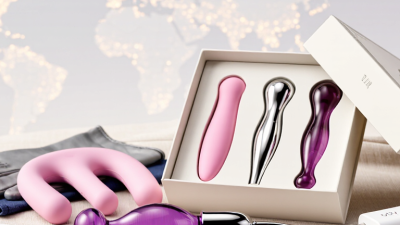
Choosing a Urethral Plug supplier involves more than comparing prices or polished product photos. Buyers need clear specifications, dependable communication, and evidence that materials suit the product’s stated use. A smooth finish matters, but photographs alone cannot confirm quality.
This guide introduces ten suppliers for global buyers to assess. It offers a starting point, not a guarantee or endorsement. Supplier capabilities can change, and product ranges may differ by region. Check dimensions, material descriptions, manufacturing location, order minimums, lead times, and available quality documentation before requesting a quotation. Small details count. A missing size chart or vague material label can make a sample difficult to evaluate.
Experienced buyers may also ask how products are inspected, packaged, and traced through production. Where relevant, request current test reports and confirm what each report actually covers. Do not assume one certificate applies to every model or market. Requirements vary, and local professional advice may be needed. This can feel repetitive, but careful verification is worthwhile.
The comparison should help purchasers prepare better questions and identify suppliers that communicate plainly. It cannot replace independent checks, sample reviews, or qualified medical guidance when health concerns arise. There is no perfect checklist. A supplier that fits one project may not suit another, so compare evidence against your specific needs before making a decision.

Urethral plugs are narrow devices designed specifically for urethral use. They are not interchangeable with ordinary intimate accessories or medical instruments. Designs may be straight or gently curved, with different lengths, diameters, and stopper shapes. A smooth, rounded finish can reduce rough edges, but appearance alone cannot confirm safety.
Materials vary. Properly finished stainless steel and body-safe silicone are common options, though each product should clearly state its material and intended use. Nonporous surfaces are generally easier to clean than porous ones. Avoid products with cracks, seams, rough spots, or unclear material claims. Materials matter. A polished surface is not proof of quality.
These products are generally marketed for adult intimate stimulation, not as treatment for urinary problems. Clinical instruments have separate specifications and should be selected by qualified healthcare professionals. Urethral insertion carries risks, including irritation, infection, bleeding, and injury, so careful product selection cannot remove those risks. Stop if pain or bleeding occurs, and seek medical advice for persistent symptoms. Product descriptions do not always make the distinction between consumer devices and clinical tools clear; buyers should check intended-use statements and consult a clinician when uncertain.
The global supplier landscape includes medical-device manufacturers, specialist molding companies, contract producers, and regional distributors. These ten supplier types may differ in material options, production scale, documentation, and customization. Some provide detailed material specifications and batch traceability; others focus on catalog access and local logistics. A polished website proves little. Request current technical documents and confirm which entity actually manufactures the product.
For urethral plugs, small design details matter: surface finish, dimensions, flexibility, packaging, and clear instructions. Ask how suppliers verify product consistency and handle complaints or recalls. Check applicable destination-market requirements with a qualified regulatory professional; requirements vary. Do not treat a supplier’s marketing claims as clinical evidence. I would also compare communication quality. Slow, vague answers can complicate quality checks later. No single ranking fits every buyer.
Tips: Request samples only through an appropriate professional review process, and assess documentation before discussing price. Confirm material composition, traceability, quality controls, and after-sales support in writing. Seek advice from a qualified clinician before evaluating any product intended for urethral use.
This chart counts the verification questions in a buyer-side checklist for comparing suppliers. The counts describe the checklist structure—not supplier ratings, market shares, or verified claims about any company.
When comparing urethral plug suppliers, request the exact material grade and its intended-contact rationale. ISO 10993 is a biological evaluation framework, not a universal product certificate. Ask how the supplier assessed contact type, duration, and patient exposure. Relevant test reports should identify the tested material, methods, and sample condition. A report for a similar polymer may not represent the finished device. Details matter.
Traceability should connect each finished-product lot to material batches and manufacturing records. Check that certificates name the material grade, batch number, and issuing party. Ask how suppliers handle changes in resin, additives, processing, or subcontractors.
Small changes can alter performance. A clear change-control process helps buyers assess whether prior evidence still applies. Keep the records. If documents conflict, pause qualification and ask for clarification rather than filling gaps with assumptions.
Paperwork can look tidy while leaving one unanswered question: does it match the product being purchased? Evaluate the evidence with qualified regulatory and clinical professionals, and avoid treating supplier claims as proof of suitability.
Choosing among urethral plug suppliers requires more than comparing catalog claims. Request a current ISO 13485:2016 certificate and check its scope, manufacturing sites, issuing body, and expiry date. The scope should match the activities relevant to the product. A certificate indicates that a quality system has been audited; it does not prove that every model is suitable for every intended use. Small distinction. It matters.
For EU buyers, review the product’s intended purpose, classification, declaration of conformity, and applicable notified-body certificate. Confirm that the documents identify the same model and legal manufacturer. For US distribution, check FDA establishment registration and device listing records, and determine whether the device needs 510(k) clearance or has a documented exemption. Registration is not FDA approval. Suppliers should explain their regulatory role clearly, rather than relying on broad claims.
Ask for evidence of lot traceability, material specifications, and validated sterilization and packaging processes when supplied as sterile. Biocompatibility evidence should relate to the device’s materials and intended contact. Review change control, complaint handling, and corrective-action records where available. A neat PDF is not enough. Dates, product codes, and manufacturing sites should agree across records; they sometimes do not, and that deserves follow-up before qualification.
| No. | Review Dimension | Evidence to Request | Buyer Review Point |
|---|---|---|---|
| 1 | Legal manufacturer and device identity | Legal manufacturer name and address, device name, model or catalogue reference, intended purpose, and the party responsible for placing the device on the market. | Match the identity and device details across certificates, declarations, labels, instructions for use, and regulatory database records. Do not treat a trading company as the manufacturer without supporting documentation. |
| 2 | ISO 13485:2016 quality management system | Current certificate, certification-body details, certificate scope, covered sites, issue and expiry dates, and any applicable accreditation information. | Check that the scope and sites cover the relevant medical-device activities. An ISO 13485 certificate is evidence of a quality management system; it is not, by itself, product approval or authorization to sell in a market. |
| 3 | EU MDR conformity and CE marking | EU Declaration of Conformity, device classification rationale, applicable conformity-assessment documentation, and notified-body certificate where required. | Confirm the claimed route is consistent with Regulation (EU) 2017/745 and the device’s intended purpose and classification. Not every device follows the same notified-body route; do not infer MDR conformity from a CE logo alone. |
| 4 | EU economic-operator and traceability details | EU authorized representative details where applicable, importer information, Basic UDI-DI/UDI information where applicable, and relevant device registration details. | Verify that required roles and identifiers are consistent across the label, declaration, technical documentation, and applicable EU records. Requirements depend on the device and the parties’ roles. |
| 5 | FDA establishment and device records | FDA establishment registration and device listing details, the device’s classification or product code where applicable, and any relevant 510(k), De Novo, or PMA information. | Check FDA records against the exact legal manufacturer and device. Establishment registration and device listing do not, by themselves, mean that FDA has approved, cleared, or endorsed a device. |
| 6 | U.S. quality-system requirements | Information showing how the manufacturer maintains its quality system and complies with applicable U.S. requirements, including the FDA Quality Management System Regulation (QMSR). | The QMSR took effect on February 2, 2026, and incorporates ISO 13485:2016 by reference with FDA-specific provisions. An ISO certificate alone does not establish compliance with every applicable FDA requirement. |
| 7 | Biological safety and material controls | Material specifications, supplier controls, risk assessment, and biological evaluation documentation relevant to the device’s materials and nature and duration of patient contact. | Review whether the evaluation is appropriate for the finished device and its intended contact. A generic material statement or a test report for a different product may not be sufficient evidence. |
| 8 | Sterility and packaging, if supplied sterile | Sterilization method, validation and routine-control records, sterile-barrier packaging evidence, and shelf-life or package-integrity validation. | Confirm that claims of sterility are supported for the marketed configuration and that packaging protects the device through the stated shelf life. These records are not applicable in the same way to devices supplied non-sterile. |
| 9 | Labeling, instructions, and intended use | Current labels and instructions for use, including intended purpose, warnings, contraindications, insertion and removal instructions, storage conditions, and required language versions. | Check that claims and instructions are consistent with the regulatory documentation and target-market requirements. Do not assume that a device’s classification or regulatory pathway is the same in every jurisdiction. |
| 10 | Post-market surveillance and change control | Complaint-handling and vigilance procedures, applicable post-market surveillance documentation, traceability and recall procedures, and controls for material, design, site, or process changes. | Ask how safety issues and reportable events are assessed and communicated, and how changes are evaluated for regulatory impact. EU MDR obligations vary by device class and economic-operator role. |
Important: This table is a regulatory and quality due-diligence framework, not a verified ranking of ten suppliers. No supplier-specific certification, clearance, approval, or listing status is claimed. Verify current records against the exact legal manufacturer and device before purchasing.
For global buyers, compare suppliers by more than unit price. Ask for the minimum order quantity by material, size, and packaging option; a low MOQ may apply only to one standard version. Request a sample before committing. Check its finish, dimensions, packaging, and labeling against the written specification. Small details matter.
Confirm realistic production lead times, including sample approval and any customization. Ask what happens if a shipment misses the agreed date. Documentation should identify materials and production batches, and include relevant test reports and care instructions. Verify that reports match the exact product and material being offered; a generic certificate may not tell you much. Keep records. Requirements can differ by destination, so buyers should confirm applicable rules with qualified local advisers.
Get shipping terms in writing, including the named delivery point, who arranges freight, and who handles export documents. Clarify whether duties and taxes are included, and request carton dimensions and gross weight for freight estimates. Compare air and sea options using the same delivery assumptions. Build in time for customs review. A spreadsheet can still miss a delay caused by packaging changes or incomplete paperwork, so ask the supplier to flag changes promptly. ETA wording can be vague. Define it.